
- The common bean (Phaseolus vulgaris) is one of the most important members of the Fabaceae family of plants found worldwide. The green bean pods are cooked as a vegetable, and some varieties are stored dry, then rehydrated before cooking. Leaves are occasionally used as a salad.
- Bean pods are believed to be helpful in obesity and weight loss programs, as well as obesity-related diseases, such as diabetes mellitus type 2 and heart disease.
- Bean pods are also commonly believed to have antibacterial, anti-inflammatory, antioxidant, antiparasitic, antiviral, cleansing and detoxifying, diuretic (increases urination), emollient (moisturizing), and gas-relieving properties.
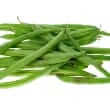
Ingredients
Beanpod
Explore the available health information, treatment context, and integrative evidence for Beanpod.
Evidence Ledger
Grades describe the evidence for Beanpod relative to each listed condition or goal.
Background
References
- Blair MW, Diaz JM, Hidalgo R, et al. Microsatellite characterization of Andean races of common bean (Phaseolus vulgaris L.). Theor Appl Genet 2007;116(1):29-43. View Abstract
- Blair MW, Giraldo MC, Buendia HF, et al. Microsatellite marker diversity in common bean (Phaseolus vulgaris L.). Theor Appl Genet 2006;113(1):100-109. View Abstract
- Blair MW, Pedraza F, Buendia HF, et al. Development of a genome-wide anchored microsatellite map for common bean (Phaseolus vulgaris L.). Theor Appl Genet 2003;107(8):1362-1374. View Abstract
- Celleno L, Tolaini MV, D'Amore A, et al. A Dietary supplement containing standardized Phaseolus vulgaris extract influences body composition of overweight men and women. Int J Med Sci 2007;4(1):45-52. View Abstract
- Diaz LM, Blair MW. Race structure within the Mesoamerican gene pool of common bean (Phaseolus vulgaris L.) as determined by microsatellite markers. Theor Appl Genet 2006;114(1):143-154. View Abstract
- Espinosa-Alonso LG, Lygin A, Widholm JM, et al. Polyphenols in wild and weedy Mexican common beans (Phaseolus vulgaris L.). J Agric Food Chem 2006;54(12):4436-4444. View Abstract
- Grisi MC, Blair MW, Gepts P, et al. Genetic mapping of a new set of microsatellite markers in a reference common bean (Phaseolus vulgaris) population BAT93 x Jalo EEP558. Genet Mol Res 2007;6(3):691-706. View Abstract
- Ionescu-Tirgoviste C, Popa E, Mirodon Z,. [The effect of a plant mixture on the metabolic equilibrium in patients with type-2 diabetes mellitus]. Rev Med Interna Neurol Psihiatr Neurochir Dermatovenerol Med Interna 1989;41(2):185-192. View Abstract
- Lara-Diaz VJ, Gaytan-Ramos AA, Davalos-Balderas AJ, et al. Microbiological and toxicological effects of Perla black bean (Phaseolus vulgaris L.) extracts: in vitro and in vivo studies. Basic Clin Pharmacol Toxicol 2009;104(2):81-86. View Abstract
- Maras M, Susnik S, Sustar-Vozlic J, et al. Temporal changes in genetic diversity of common bean (Phaseolus vulgaris L.) accessions cultivated between 1800 and 2000. Genetika 2006;42(7):947-954. View Abstract
- Morales-de Leon JC, Vazquez-Mata N, Torres N, et al. Preparation and characterization of protein isolate from fresh and hardened beans (Phaseolus vulgaris L.). J Food Sci 2007;72(2):C96-102. View Abstract
- Shirke SS, Jadhav SR, Jagtap AG. Osteoprotective effect of Phaseolus vulgaris L in ovariectomy-induced osteopenia in rats. Menopause 2009;16(3):589-596. View Abstract
- Udani J, Singh BB. Blocking carbohydrate absorption and weight loss: a clinical trial using a proprietary fractionated white bean extract. Altern Ther Health Med 2007;13(4):32-37. View Abstract
- Udani J, Hardy H, Madsen DC. Blocking carbohydrate absorption and weight loss: a clinical trial using Phase 2 brand proprietary fractionated white bean extract. Altern Med Rev 2004;9(1):63-69. View Abstract
- Venkateswaran S, Pari L, Saravanan G. Effect of Phaseolus vulgaris on circulatory antioxidants and lipids in rats with streptozotocin-induced diabetes. J Med Food 2002;5(2):97-103. View Abstract