
- Sanicle (Sanicula europaea, Sanicula europa) is a perennial plant in the Apiaceae family that is found in woodlands across Europe, Asia, and Africa. Sanicle products are generally made from the aerial plant parts.
- Sanicle has been used for mild lung inflammation and congestion, cough, and bronchitis. Early study has investigated the potential antifungal, antioxidant, antiviral, and anti-HIV effects of sanicle. Sanicle has also been studied for its use in ear infections, atopic eczema, and asthma.
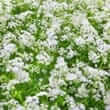
Ingredients
Sanicle (Sanicula europa L., Sanicula europaea L., Sanicula L.)
Explore the available health information, treatment context, and integrative evidence for Sanicle (Sanicula europa L., Sanicula europaea L., Sanicula L.).
Evidence Ledger
Grades describe the evidence for Sanicle (Sanicula europa L., Sanicula europaea L., Sanicula L.) relative to each listed condition or goal.
Background
References
- Arda N, Goren N, Kuru A, et al. Saniculoside N from Sanicula europaea L. J Nat Prod. 1997;60(11):1170-1173.
View Abstract - Calvino CI, Downie SR. Circumscription and phylogeny of Apiaceae subfamily Saniculoideae based on chloroplast DNA sequences. Mol Phylogenet Evol. 2007;44(1):175-191.
View Abstract - Calvino CI, Martinez SG, Downie SR. The evolutionary history of Eryngium (Apiaceae, Saniculoideae): Rapid radiations, long distance dispersals, and hybridizations. Mol Phylogenet Evol. 2008;46(3):1129-1150.
View Abstract - Cheel J, Schmeda-Hirschmann G, Jordan M, et al. Free radical scavenging activity and secondary metabolites from in vitro cultures of Sanicula graveolens. Z Naturforsch [C.] 2007;62(7-8):555-562.
View Abstract - Engel S, Horn K. [Phytodermatosis by Dictamnus alba, Sanicula europaea and Phyllodendron consanguineum]. Dermatol Monatsschr. 1972;158(1):22-27.
View Abstract - Hiller K. [On the contents of some saniculoids. 1. Sanicula europaea L.--isolation and quantitative understanding of chlorogenic and rosmarinus acid]. Pharmazie 1965;20(9):574-579.
View Abstract - Karagoz A, Arda N, Goren N, et al. Antiviral activity of Sanicula europaea L. extracts on multiplication of human parainfluenza virus type 2. Phytother Res. 1999;13(5):436-438.
View Abstract - Lamaison JL, Petitjean-Freytet C, Carnat A. [Rosmarinic acid, total hydroxycinnamic derivatives and antioxidant activity of Apiaceae, Borraginaceae and Lamiceae medicinals]. Ann Pharm Fr. 1990;48(2):103-108.
View Abstract - Le Claire E, Schwaiger S, Banaigs B, et al. Distribution of a new rosmarinic acid derivative in Eryngium alpinum L. and other Apiaceae. J Agric Food Chem. 6-1-2005;53(11):4367-4372.
View Abstract - Matsushita A, Miyase T, Noguchi H, et al. Oleanane saponins from Sanicula elata var. chinensis. J Nat Prod. 2004;67(3):377-383.
View Abstract - Schopke T, Janka M, Nimtz M, et al. Saniculoside R-1: a new triterpenoid saponin from Sanicula europaea. Planta Med. 1998;64(1):83-85.
View Abstract - Sevar R. Sanicula aqua: three clinical cases and a heuristic. Homeopathy. 2005;94(2):125-131.
View Abstract - Turan K, Nagata K, Kuru A. Antiviral effect of Sanicula europaea L. leaves extract on influenza virus-infected cells. Biochem Biophys Res Commun. 8-5-1996;225(1):22-26.
View Abstract - Vargas P, Baldwin BG, Constance L. Nuclear ribosomal DNA evidence for a western North American origin of Hawaiian and South American species of Sanicula (Apiaceae). Proc Natl Acad Sci U.S.A 1-6-1998;95(1):235-240.
View Abstract - Viturro C, Molina A, Schmeda-Hirschmann G. Free radical scavengers from Mutisia friesiana (Asteraceae) and Sanicula graveolens (Apiaceae). Phytother Res. 1999;13(5):422-424.
View Abstract