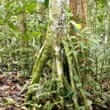
- The name "acacia" is derived from the Greek word "akis" meaning "sharp point," and relates to the sharp thorny shrubs and trees of tropical Africa and Western Asia that were the only known acacias at the time that the name was published. The Australian acacias are commonly called "wattles" because of their pliable branches that were woven into the structure of early wattle houses and fences.
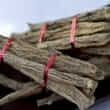
- Acacia is commonly present in chewing sticks, mainly as an antimicrobial with activity against Streptococcus fecalis. Acacia has also shown some cholesterol-lowering and antidiabetic properties, although there is insufficient evidence in support of these uses.
- Acacia is generally considered to be safe. Adverse reactions appear to be mild, with occasional gastrointestinal symptoms.
- Acacia has been used to treat high cholesterol, diabetes, cancer, gingivitis, stomatitis (mouth sores), pharyngitis, and indigestion in children. Acacia gum is used as a food additive. Acacia concinna is often used in cosmetics.

← Back to Monographs
 ingredients
Acacia
Contents
- Al Mosawi AJ. The challenge of chronic renal failure in the developing world: possible use of acacia gum. Pediatr Nephrol 2002;17(5):390-391.
View Abstract - Al Mustafa ZH, Dafallah AA. A study on the toxicology of Acacia nilotica. Am J Chin Med 2000;28(1):123-129. . View Abstract
- Boral D, Chatterjee S, Bhattacharya K. The occurrence and allergising potential of airborne pollen in West Bengal, India. Ann Agric Environ Med 2004;11(1):45-52.
View Abstract - Clark DT, Gazi MI, Cox SW, et al. The effects of Acacia arabica gum on the in vitro growth and protease activities of periodontopathic bacteria. J Clin Periodontol 1993;20(4):238-243.
View Abstract - Cvitanovic S, Znaor L, Perisic D, et al. Hypersensitivity to pollen allergens on the Adriatic coast. Arh Hig Rada Toksikol 2004;55(2-3):147-154.
View Abstract - Eltayeb IB, Awad AI, Elderbi MA, et al. Effect of gum arabic on the absorption of a single oral dose of amoxicillin in healthy Sudanese volunteers. J Antimicrob.Chemother 2004;54(2):577-578.
View Abstract - Fotisch K, Fah J, Wuthrich B, et al. IgE antibodies specific for carbohydrates in a patient allergic to gum arabic (Acacia senegal). Allergy 1998;53(11):1043-1051.
View Abstract - Gazi MI. The finding of antiplaque features in Acacia Arabica type of chewing gum. J Clin Periodontol 1991;18(1):75-77.
View Abstract - Haridas V, Hanausek M, Nishimura G, et al. Triterpenoid electrophiles (avicins) activate the innate stress response by redox regulation of a gene battery. J Clin Invest 2004;113(1):65-73.
View Abstract - Jensen CD, Haskell W, Whittam JH. Long-term effects of water-soluble dietary fiber in the management of hypercholesterolemia in healthy men and women. Am J Cardiol 1-1-1997;79(1):34-37.
View Abstract - Jensen CD, Spiller GA, Gates JE, et al. The effect of acacia gum and a water-soluble dietary fiber mixture on blood lipids in humans. J Am Coll Nutr 1993;12(2):147-154.
View Abstract - Li SS, Gao Z, Feng X, et al. Plant sterols as selective DNA polymerase beta lyase inhibitors and potentiators of bleomycin cytotoxicity. Bioorg Med Chem 8-1-2004;12(15):4253-4258.
View Abstract - Pakrashi A, Ray H, Pal BC, et al. Sperm immobilizing effect of triterpene saponins from Acacia auriculiformis. Contraception 1991;43(5):475-483.
View Abstract - Shah BH, Safdar B, Virani SS, et al. The antiplatelet aggregatory activity of Acacia nilotica is due to blockade of calcium influx through membrane calcium channels. Gen Pharmacol 1997;29(2):251-255.
View Abstract - Vaishya R. A thorny problem: the diagnosis and treatment of acacia thorn injuries. Injury 1990;21(2):97-100.
View Abstract
Disclaimer: This tool is intended for informational purposes only, and should not be interpreted as specific medical advice. Patients should consult with a qualified healthcare provider before making decisions about therapies and/or health conditions.