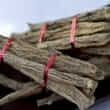
- As a dietary supplement, bovine cartilage is usually made from the tracheal (windpipe) cartilage of bovines. The dietary supplement VitaCarte® is the commercially available preparation of Catrix®, an experimental powdered preparation that is taken in capsules.
- The foremost researcher on the medicinal use of bovine cartilage was the late John F. Prudden, MD, who published the 1974 paper "The Acceleration of Wound Healing with Cartilage. I."
- Early evidence suggests that Catrix® may be beneficial for psoriasis and treatment-resistant breast cancer. However, there are scant scientific data available on the medical use of bovine cartilage. Additional research is needed to determine its safety and effectiveness.
- Bovine cartilage has also been suggested as a potential treatment for acne, alveoalgia, anal fissure, hemorrhoids, osteoarthritis, pruritus ani (irritated skin around the anus), rash from poison oak or poison ivy, and rheumatoid arthritis. According to secondary sources, bovine cartilage may have anti-inflammatory and immunomodulating actions. However, human research in these areas is lacking.
- The commercial preparation Catrix® Wound Dressing was approved by the U.S. Food and Drug Administration (FDA) in 1998, but it is not marketed in the United States. However, there is American availability of dermatologic preparations that contain the same powdered preparation of bovine cartilage as Catrix® Wound Dressing: Catrix® 10 Ointment, Catrix® 5 Rejuvenation Cream, and Catrix® Lipcare.
- The FDA does not list bovine cartilage on its Generally Recognized as Safe (GRAS) list.

← Back to Monographs
 ingredients
Bovine cartilage
Contents
- Berg, P. A., Durk, H., Saal, J., and Hopf, G. Bovine cartilage and marrow extract. Lancet 6-3-1989;1(8649):1275.
View Abstract - Durie, B. G., Soehnlen, B., and Prudden, J. F. Antitumor activity of bovine cartilage extract (Catrix-S) in the human tumor stem cell assay. J.Biol.Response Mod. 1985;4(6):590-595.
View Abstract - Durk, H., Haase, K., Saal, J., Becker, W., and Berg, P. A. Nephrotic syndrome after injections of bovine cartilage and marrow extract. Lancet 3-18-1989;1(8638):614.
View Abstract - Klein, R., Becker, E. W., Berg, P. A., and Bernau, A. Immunomodulatory properties of rumalon, a glycosaminoglycan peptide complex, in patients with osteoarthritis: activation of T helper cell type 2 cytokines and antigen-specific IgG4 antigen-specific igG4 antibodies. J.Rheumatol. 2000;27(2):448-454.
View Abstract - Liu, N., Lapcevich, R. K., Underhill, C. B., Han, Z., Gao, F., Swartz, G., Plum, S. M., Zhang, L., and Green, S. J. Metastatin: a hyaluronan-binding complex from cartilage that inhibits tumor growth. Cancer Res 2-1-2001;61(3):1022-1028.
View Abstract - Prudden, J. F. The treatment of human cancer with agents prepared from bovine cartilage. J.Biol.Response Mod. 1985;4(6):551-584.
View Abstract - Prudden, J. F. and Balassa, L. L. The biological activity of bovine cartilage preparations. Clinical demonstration of their potent anti-inflammatory capacity with supplementary notes on certain relevant fundamental supportive studies. Semin.Arthritis Rheum. 1974;3(4):287-321.
View Abstract - Saikawa, I., Hotokebuchi, T., Miyahara, H., Tokito, T., Maeda, T., Arita, C., and Sugioka, Y. High-density proteoglycan induces specific suppression of adjuvant-induced arthritis in rats. Clin Exp Immunol 1994;95(3):424-429.
View Abstract - Shukunami, C., Oshima, Y., and Hiraki, Y. Chondromodulin-I and tenomodulin: a new class of tissue-specific angiogenesis inhibitors found in hypovascular connective tissues. Biochem Biophys Res Commun. 7-29-2005;333(2):299-307.
View Abstract - Tanzi, E. L. and Perez, M. The effect of a mucopolysaccharide-cartilage complex healing ointment on Er:YAG laser resurfaced facial skin. Dermatol Surg 2002;28(4):305-308.
View Abstract - Schacht, E. and Roetz, R. Nephrotic syndrome after injections of bovine cartilage and marrow extract. Lancet 4-29-1989;1(8644):963.
View Abstract
Disclaimer: This tool is intended for informational purposes only, and should not be interpreted as specific medical advice. Patients should consult with a qualified healthcare provider before making decisions about therapies and/or health conditions.