- Lice and scabies are two types of skin conditions that are caused by ectoparasites, or parasites that that live on the outside of their hosts. A parasite obtains nourishment and/or protection from another organism, called a host.
- Lice (also called pediculosis) are tiny, parasitic insects that feed on blood from their hosts, which may be human. When a human becomes infected with lice, it is not considered a major health concern. However, it typically causes the skin to become red and itchy.
- There are several types of lice, including head lice, body lice, and pubic lice. Head lice develop on the scalp, and they may be visible near the ears, shoulder, and at the nape of the neck. The lice produce small eggs, called nits, which attach to the shaft of hairs. After about one week, the nits hatch and more lice are then present. Body lice spend most of their lives on a person's clothing, crawling on the person's skin to feed a couple times a day. The females attach their sticky eggs to the seams and folds of clothing. Pubic lice, commonly called crabs, are found on the skin and hair of the pubic area and eyelashes. Lice are easily spread through close personal contact with an infected person or his/her belongings.
- Scabies is a contagious skin disease that is caused by microscopic mites that live three to four weeks in a person's skin. The female mite burrows into the skin's surface to lay her eggs. The mites, eggs, and their waste cause an inflammatory response in the host results in itching, redness, and mild swelling of the skin.
- Both lice and scabies can be successfully treated with over-the-counter products and/or prescription-strength anti-parasitic medications. It is also recommended that individuals wash and vacuum items that may be contaminated to prevent re-infections. Also, individuals who live with or have close personal contact with someone who has lice or scabies should receive treatment as well.

← Back to Monographs
 medical conditions
Lice/scabies
Contents
- General: Lice and scabies are most common among schoolchildren, individuals living in crowded areas, and people living in poverty or unsanitary conditions.
- Lice: Humans can get lice after coming into direct contact with lice or their eggs. Lice cannot fly, but individuals may be exposed to them when they touch an infected person or his/her personal belongings, such as bed linens, clothing, stuffed animals, or towels. For instance, head lice are commonly transmitted after sharing pillows, combs/brushes, or hair clips. They can live for up to two days off of the body. Lice can also be spread through sexual contact or after using a toilet seat that was recently used by someone who is infected.
- Scabies: Scabies is caused by a burrowing mite, called Sarcoptes scabiei. Scabies is often spread through direct or prolonged skin contact with an infected person or animal (such as a pet dog or cat). It is easily spread through direct contact with sexual partners or family members. It may also be spread after sharing clothes, towels, bedding, or other linens with an infected person.
- Lice: Lice typically cause intense itching and small red bumps to develop on affected areas of the skin. The lice may be visible on the skin, body hair, clothing, or other personal items. They are about three millimeters long. Lice eggs, called nits, may also be visible on hair shafts. Nits look similar to dandruff, but they are not easily brushed away.
- Symptoms of head lice typically develop on the scalp, ears, nape of the neck, and shoulders. Symptoms of body lice may develop anywhere on the body that has hair. Symptoms of pubic lice typically develop in the pubic area and on the eye lashes.
- Scabies: Symptoms of scabies usually develop about four to six weeks after they enter the skin. Scabies causes pimple-like irritations, burrows, or a rash to develop on the skin. The skin on the wrists, elbows, knees, genitals (in men), breasts (in females), shoulder blades, and between the fingers is most likely to be affected. The affected skin is extremely itchy. Itching is most severe at night or after a hot shower or exercise. Individuals may also develop sores and small cuts from scratching the skin.
- Lice: A diagnosis can be made after a physical examination. Although lice are very small, they are visible to the human eye. If lice are present, a positive diagnosis is made.
- Scabies: During a physical examination, a healthcare provider looks at the skin to see if the characteristic burrows are present. These burrows appear as fine, wavy, and slightly scaly lines. The skin around burrows is red and slightly inflamed. Once a burrow is located, a small skin sample may be taken. This sample is then analyzed under a microscope to see if the mites and/or eggs are present.
- Individuals with scabies often develop sores and small cuts from scratching affected areas of skin. If bacteria enter the skin through these sores or cuts, an infection may develop.
- General: Both lice and scabies can be successfully treated with over-the-counter products and/or prescription-strength anti-parasitic medications. In order to prevent re-infection, it is recommended that individuals wash and vacuum items that may be contaminated. Also, individuals who live with or have close personal contact with someone who has lice or scabies should receive treatment as well.
- Use lotions and shampoos: Individuals with lice can use over-the-counter lotions and shampoos, such as Nix® or Rid®, to kill lice and their eggs. These products are made with anti-parasitic medications (such as permethrin) that kill the lice. These products should be used as directed on the package labeling. Sometimes, treatment may need to be repeated seven to 10 days later in order to get rid of all the lice. Children younger than two years old should not use these products.
- Vinegar rinse:
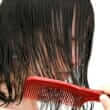
Individuals may also rinse the hair with vinegar after using an anti-parasitic shampoo. Individuals first pour vinegar onto a clean cloth. Then, hold a lock of hair and wipe the hair from the root to the end. This process is repeated until all of the hair has been treated. Rinsing the hair with vinegar helps remove nits that stick to the shaft of the hair. - Comb wet hair: Combing wet hair with a fine-toothed comb, or a nit comb (available at local pharmacies), may help remove lice and their eggs from the hair. This is generally used in combination with shampoos or lotions that are designed to kill lice.
- Prescription-strength shampoos: If over-the-counter (OTC) products do not successfully treat lice, a healthcare provider may recommend stronger shampoos or lotions, such as malathion (Ovide®) or lindane (Kwell®), which are only available by prescription
- Wash contaminated items: In order to prevent re-infections with lice or scabies, it is important to wash all items that may be contaminated. This includes items, such as bed linens, pillows, clothing, hats, and stuffed animals. Wash the items for at least 10 minutes in hot, soapy water that is at least 130 degrees Fahrenheit. Then dry the items at high heat for at least 20 minutes. This kills any scabies, lice, or eggs that may be present. Combs and brushes should also be washed in hot soapy water or soaked in rubbing alcohol for one hour.
- Seal items that cannot be washed: Items that cannot be washed should be sealed in airtight bags for at least two weeks. The lice and scabies will die because they have nothing to eat. Individuals may also cover furniture with plastic drop cloths for two weeks to kill the parasites. However, plastic furniture coverings are not recommended if a toddler lives in the home because there is a risk of suffocation.
- Vacuum: Thoroughly vacuuming carpeting, furniture, mattresses, and tapestry effectively kills scabies and lice. After vacuuming, the vacuum bag should be thrown away immediately.
- Antihistamines: Individuals with scabies may benefit from medications called antihistamines. Medications, such as diphenhydramine (Benadryl®), may be taken by mouth or applied to the skin. Although these medications do not kill scabies, they may help reduce redness, swelling, and itching of the skin. This is because the mites, eggs, and their waste trigger an allergic skin reaction that results in itching and redness.
- Scabicide: Drugs called scabicides are used to treat scabies. Many skin lotions or creams, such as Lindane®, permethrin (Acticin® or Elimite®), or crotamiton (Eurax Cream® or Eurax Lotion®), are applied to the skin from the neck down to kill the parasite. Treatment lasts for seven days to ensure that all the eggs are killed. Itching often lasts for about one week after treatment ends. Family members, sexual contacts, and others who have had skin-to-skin contact with a person diagnosed with scabies should also be treated.
Unclear or conflicting scientific evidence
- American pawpaw
: American pawpaw (Asimina triloba) is a fruiting tree native to North America. However, the tree is also cultivated in Asia, Australia, and Europe. Pawpaw extract in combination with thymol (thyme oil) and tea tree oil in a shampoo formulation may effectively treat lice. Better-quality studies using pawpaw alone are needed before a firm recommendation can be made. - Well-designed studies on the long-term effects of pawpaw extracts have not been conducted. The constituents in pawpaw extract are cytotoxic (poisonous to cells). Therefore, oral use of pawpaw extract is not recommended without the supervision of a physician. Avoid if allergic to Asimina triloba or any other members of the Annonaceae plant family (including other species of Asimina and those in the genera Annona, Deeringothamnus, Disepalum, Goniothalanus, Rollinia, Uvaria, or Xylopia). Use cautiously with gastrointestinal problems or with a history of dermatological reactions.
- Hibiscus
: The Hibiscus genus contains several species, many of which have been used medicinally. Currently, there is limited available evidence evaluating the effects of hibiscus for the treatment of head lice. Study participants have been treated with creams containing hibiscus tea plus henna. Additional studies involving hibiscus alone are warranted in this area. - Avoid if allergic or hypersensitive to hibiscus, its constituents, or members of the Malvaceae family. Use cautiously with high or low blood pressure.
- Tea tree oil
: Early studies have found that tea tree alone or in combination with other agents may be effective against lice. However, large, well-designed trials are still needed before a conclusion can be made. - Avoid allergic or hypersensitive to tea tree oil (Melaleuca alternifolia), any of its constituents, balsam of Peru, benzoin, colophony (rosin) tinctures, eucalyptol, or other members of the Myrtle (Myrtaceae) family. Avoid taking tea tree oil by mouth. Avoid if taking antineoplastic agents. Use tea tree oil applied to the skin cautiously in patients with previous tea tree oil use. Avoid if pregnant or breastfeeding.
- Turmeric
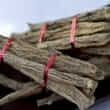
: Turmeric (Curcuma longa) is a perennial plant native to India and Indonesia, and it is often used as a spice in cooking. The rhizome (root) of turmeric has long been used in traditional Asian medicine. Historically, turmeric has been used on the skin to treat scabies. It has also been used in combination with neem (Azadirachta indica) leaves. More research is necessary before a conclusion can be made. - Avoid if allergic to turmeric (curcumin), yellow food colorings, or plants belonging to the Curcuma and Zingiberaceae (ginger) families. Use cautiously with a history of bleeding disorders, immune system deficiencies, liver disease, or gallstones. Use cautiously if taking blood-thinners, such as warfarin (Coumadin®). Historically, turmeric has been considered safe when used as a spice in foods during pregnancy and breastfeeding. However, turmeric is not recommended to be ingested in high doses from foods, or to be used medicinally in pregnant women because the herb has been found to cause uterine contractions and to stimulate menstrual flow.
- General: Once an individual is diagnosed with lice or scabies, it is important to take steps to prevent re-infections. It is recommended that individuals wash and vacuum items that may be contaminated. Also, individuals who live with or have close personal contact with someone who has lice or scabies should receive treatment as well.
- Lice: It is often difficult to prevent lice in young children. This is because children are in close contact with many other children during school and day care. Individuals can reduce the risk of getting lice by not sharing hats, combs, hair pins/clips, or other hair products with others.
- Sometimes, individuals may have lice eggs (called nits) in their hair, without having an infestation of lice. This is because some nits may simply be the empty egg shells of lice that have already hatched. However, it is recommended that patients seek treatment, even if just one egg is found. This can help prevent an infection in case un-hatched eggs are also present.
- Scabies: Individuals should use a paper covering when using a public toilet. Individuals should avoid close personal contact with individuals who have scabies until they have been successfully treated.
- Centers for Disease Control and Prevention (CDC). . Accessed April 12, 2009.
- Currier RW. Lice & scabies control. Iowa Med. 1986 Feb;76(2):80, 82.
View Abstract - Elgart ML. Current treatments for scabies and pediculosis. Skin Therapy Lett. 1999;5(1):1-3.
View Abstract - Flinders DC, De Schweinitz P. Pediculosis and scabies. Am Fam Physician. 2004 Jan 15;69(2):341-8.
View Abstract - Huynh TH, Norman RA. Scabies and pediculosis. Dermatol Clin. 2004 Jan;22(1):7-11.
View Abstract - National Institute of Allergy and Infectious Diseases (NIAID). . Accessed April 12, 2009.
- Natural Standard: The Authority on Integrative Medicine. . Copyright © 2009. Accessed April 12, 2009.
- Olifer VV, Roslavtseva SA. Current problems and ways of their solution in the prevention of scabies and pediculosis. Article in Russian. Gig Sanit. 2006 Mar-Apr;(2):25-9.
View Abstract - Wendel K, Rompalo A. Scabies and pediculosis pubis: an update of treatment regimens and general review. Clin Infect Dis. 2002 Oct 15;35(Suppl 2):S146-51.
View Abstract - World Health Organization (WHO). . Accessed April 12, 2009.
Disclaimer: This tool is intended for informational purposes only, and should not be interpreted as specific medical advice. Patients should consult with a qualified healthcare provider before making decisions about therapies and/or health conditions.