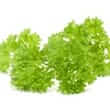
- Parsley is native to the Mediterranean and has reportedly been used for more than 2,000 years as an herbal remedy, seasoning, and garnish. In ancient Rome, parsley was a sacred herb of burial and was served at funeral banquets. This is thought to be the origin of the modern use of parsley as a garnish decorating plates of food. Romans wore garlands of parsley in the belief that it would excite the brain and stimulate the appetite. Later, victors of athletic contests were crowned with garlands of parsley.
- The forms of parsley most commonly used for medicinal purposes are Petroselinum crispum (curled-leaf parsley) and Petroselinum neapolitanum (Italian parsley, also known as flat-leaf parsley). Chinese parsley, also known as coriander or cilantro, is a different species, Coriandrum sativum.
- Parsley has traditionally been used as a digestive aid, breath freshener, laxative, diuretic, general-purpose tonic, abortifacient (miscarriage inducer), and a poultice applied to the skin for treatment of burns, bruises, insect bites, and itching.
- There is evidence that parsley may act as an antioxidant, diuretic, or blood sugar-lowering agent. Parsley is currently used in Turkey to treat diabetes and in Germany as a diuretic in the treatment of high blood pressure.
- Parsley is available in capsule form as an oil, root, leaf, or seed preparation. The oil is the strongest form, followed by the seeds. These two more powerful preparations should be avoided during pregnancy, because they may cause uterine contractions and induce abortion.
- Parsley is listed in the U.S. Food and Drug Administration (FDA) Generally Recognized as Safe (GRAS) list.

← Back to Monographs
 ingredients
Parsley (Petroselinum spp., Petroselinum crispum, Petroselinum neapolitanum)
Contents
- Chrubasik S, Droste C, Dragano N, et al. Effectiveness and tolerability of the herbal mixture Asparagus P on blood pressure in treatment-requiring antihypertensives. Phytomedicine. 2006;13(9-10):740-2.
View Abstract - Daly T, Jiwan MA, O'Brien NM, et al. Carotenoid content of commonly consumed herbs and assessment of their bioaccessibility using an in vitro digestion model. Plant Foods Hum Nutr. 2010;65(2):164-9.
View Abstract - Duthie GG. Parsley, polyphenols and nutritional antioxidants. Br J Nutr 1999;81(6):425-6.
View Abstract - Gorgus E, Lohr C, Raquet N, et al. Limettin and furocoumarins in beverages containing citrus juices or extracts. Food Chem Toxicol. 2010;48(1):93-8.
- Heck AM, DeWitt BA, Lukes AL. Potential interactions between alternative therapies and warfarin. Am J Health Syst Pharm. 2000;57(13):1221-7.
View Abstract - Meeran SM, Katiyar SK. Cell cycle control as a basis for cancer chemoprevention through dietary agents. Front Biosci. 2008;13:2191-202.
View Abstract - Meyer H, Bolarinwa A, Wolfram G, et al. Bioavailability of apigenin from apiin-rich parsley in humans. Ann Nutr Metab 2006;50(3):167-72.
View Abstract - Nielsen SE, Young JF, Daneshvar B, et al. Effect of parsley (Petroselinum crispum) intake on urinary apigenin excretion, blood antioxidant enzymes and biomarkers for oxidative stress in human subjects. Br J Nutr 1999;81(6):447-55.
View Abstract - O'Neil J, Hughes S, Lourie A, et al. Effects of echinacea on the frequency of upper respiratory tract symptoms: a randomized, double-blind, placebo-controlled trial. Ann Allergy Asthma Immunol. 2008;100(4):384-8.
View Abstract - Patel D, Shukla S, Gupta S. Apigenin and cancer chemoprevention: progress, potential and promise (review). Int J Oncol. 2007 Jan;30(1):233-45.
View Abstract - Potter JD, Steinmetz K. Vegetables, fruit and phytoestrogens as preventive agents. IARC Sci Publ. 1996;(139):61-90.
View Abstract - Putnam SE, Scutt AM, Bicknell K, et al. Natural products as alternative treatments for metabolic bone disorders and for maintenance of bone health. Phytother Res. 2007;21(2):99-112.
View Abstract - Ren S, Lien EJ. Natural products and their derivatives as cancer chemopreventive agents. Prog Drug Res. 1997;48:147-71.
View Abstract - Wright CI, Van-Buren L, Kroner CI, et al. Herbal medicines as diuretics: a review of the scientific evidence. J Ethnopharmacol. 2007;114(1):1-31.
View Abstract - Yarnell E. Botanical medicines for the urinary tract. World J Urol. 2002;20(5):285-93.
View Abstract
Disclaimer: This tool is intended for informational purposes only, and should not be interpreted as specific medical advice. Patients should consult with a qualified healthcare provider before making decisions about therapies and/or health conditions.