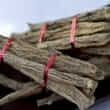
- Chinese herbalists have relied on rhubarb rhizomes and roots for thousands of years. The rhizomes and roots contain powerful anthraquinones and tannins that act as stimulant laxatives and astringents, respectively. In traditional Chinese medicine, rhubarb is also used to treat gastric ulcers, chronic renal (kidney) failure, and pregnancy-induced hypertension (high blood pressure), pre-eclampsia and eclampsia. European herbalists have recommended rhubarb as a laxative, diuretic, and to treat kidney stones, gout (foot inflammation), and liver diseases. Externally, it is recommended to heal skin sores and scabs.
- The current practice of using rhubarb to treat cancer (as an ingredient in the herbal Essiac® formula) lacks the support of controlled clinical trials. However, rhubarb is being tested for multiple other conditions, including hyperlipidemia (high cholesterol) and obesity.
- Use for gingivitis, chronic renal failure and upper gastrointestinal bleeding seem to be the most promising, although more research should be done in these areas, specifically with rhubarb as a monotherapy.

← Back to Monographs
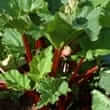 ingredients
Rhubarb
Contents
- Albrecht UW. [The efficacy and tolerability of Pyralvex solution and Pyralvex Gel in the treatment of gingivitis. Results of double-blind, randomised, controlled clinical trials]. Der Freie Zahnarzt 1997;9:76-80.
- Cai J, Xuan ZR, Wei YP, et al. [Effects of perioperative administration of Rhubarb on acute inflammatory response in patients with gastric cancer]. Zhong.Xi.Yi.Jie.He.Xue.Bao. 2005;3(3):195-198.
View Abstract - Deng YY, Chen YP, Wang L, et al. [Clinical study on treatment of mid-advanced crescentic nephritis by qingre huoxue recipe]. Zhongguo Zhong.Xi.Yi.Jie.He.Za Zhi. 2004;24(12):1084-1086.
View Abstract - Fan JG. Evaluating the efficacy and safety of Danning Pian in the short-term treatment of patients with non-alcoholic fatty liver disease: a multicenter clinical trial. Hepatobiliary.Pancreat.Dis.Int 2004;3(3):375-380.
View Abstract - Fu DC, Yu CY. [Observation on therapeutic effect of Rhubarb and sanchi powder in treating patients with hemorrhagic fever in nephrotic syndrome complicated with digestive tract bleeding]. Zhongguo Zhong.Xi.Yi.Jie.He.Za Zhi. 2005;25(8):744-747.
View Abstract - Greenway FL, Liu Z, Martin CK, et al. Safety and efficacy of NT, an herbal supplement, in treating human obesity. Int J Obes (Lond) 4-25-2006;
View Abstract - Ho TY, Wu SL, Chen JC, et al. Emodin blocks the SARS coronavirus spike protein and angiotensin-converting enzyme 2 interaction. Antiviral Res 5-15-2006.
View Abstract - Li C, Zhou J, Gui P, He X. Protective effect of rhubarb on endotoxin-induced acute lung injury. J Tradit.Chin Med 2001;21(1):54-58.
View Abstract - Pelletier JP, Yaron M, Haraoui B, et al. Efficacy and safety of diacerein in osteoarthritis of the knee: a double-blind, placebo-controlled trial. The Diacerein Study Group. Arthritis Rheum 2000;43(10):2339-2348.
View Abstract - Peng SM, Wang SZ, Zhao JP. [Effect of rhubarb on inflammatory cytokines and complements in patients with systemic inflammation reaction syndrome and its significance]. Zhongguo
- Zhong.Xi.Yi.Jie.He.Za Zhi. 2002;22(4):264-266.
View Abstract - Sauro S, Gandolfi MG, Prati C, et al. Oxalate-containing phytocomplexes as dentine desensitisers: An in vitro study. Arch Oral Biol 4-5-2006;
View Abstract - Tseng SH, Lee HH, Chen LG, et al. Effects of three purgative decoctions on inflammatory mediators. J Ethnopharmacol. 4-21-2006;105(1-2):118-124.
View Abstract - Yan M, Zhang LY, Sun LX, et al. Nephrotoxicity study of total rhubarb anthraquinones on Sprague Dawley rats using DNA microarrays. J Ethnopharmacol. 4-15-2006;
View Abstract - Zhou Y, Huang Z, Huang T, et al. Clinical study of shengxue mixture in treating aplastic anemia. Chinese Journal of Integrated Traditional and Western Medicine 2001;7(3):186-189.
- Zhu W, Wang XM, Zhang L, et al. Pharmacokinetic of rhein in healthy male volunteers following oral and retention enema administration of rhubarb extract: a single dose study. Am J Chin Med 2005;33(6):839-850.
View Abstract
Disclaimer: This tool is intended for informational purposes only, and should not be interpreted as specific medical advice. Patients should consult with a qualified healthcare provider before making decisions about therapies and/or health conditions.