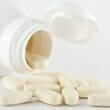
- The spleen is a fist-sized organ located under the lower left side of the rib cage that removes worn-out red blood cells and platelets, produces certain types of white blood cells, and destroys bacteria and cellular debris. Spleen extract primarily comes from the spleens of cows or pigs.
- The primary use of spleen extracts is after a splenectomy, or removal of the spleen. Preliminary studies indicate that spleen extract may stimulate the immune system in conditions such as HIV/AIDS, leukemia, leprosy, Crohn's disease, and sickle cell disease. However, there are no high-quality clinical trials currently available on the use of spleen extract.
- Some concern has been raised about the safety of spleen extract, as it is made of animal spleens, which may be infected with prion (proteinaceous infectious proteins) diseases. Although there are currently no available reports of diseases such as bovine spongiform encephalitis (BSE, or "mad cow disease") attributed to the consumption of spleen extract, the U.S. Food and Drug Administration (FDA) still cautions against use of any animal organ extract. It is not clear how the processing of spleen extract affects the transmission of these diseases.

← Back to Monographs
 ingredients
Spleen extract
Contents
- Agrawal AK, Gupta CM. Tuftsin-bearing liposomes in treatment of macrophage-based infections. Adv.Drug Deliv.Rev. 3-30-2000;41(2):135-146.
View Abstract - Corazza GR, Zoli G, Ginaldi L, et al. Tuftsin deficiency in AIDS. Lancet 1-5-1991;337(8732):12-13.
View Abstract - Kaur J, Khare S, Bhutani LK, et al. Enzyme immunoassay of phagocytosis stimulating tetrapeptide "tuftsin" in normal and leprosy sera. Int.J.Lepr.Other Mycobact.Dis. 1991;59(4):576-581.
View Abstract - Khare S, Bhutani LK, Rao DN. Quantitative assessment of tuftsin receptor expression and second messenger during in vitro differentiation of peripheral blood derived monocytes of leprosy patients. Mol.Cell Biochem. 1997;171(1-2):1-10.
View Abstract - Khare S, Bhutani LK, Rao DN. Release of reactive nitrogen intermediates from the peripheral blood-derived monocytes/macrophages of leprosy patients stimulated in vitro by tuftsin. Lepr.Rev. 1997;68(1):16-24.
View Abstract - Kubo S, Roh MS, Oyedeji C, et al. Effect of tuftsin on human Kupffer cell. Hepatogastroenterology 1998;45(24):2270-2274.
View Abstract - Lewis CJ. Letter to Reiterate Certain Public Health and Safety Concerns to Firms Manufacturing or Importing Dietary Supplements that Contain Specific Bovine Tissues. 11-14-2000.
- Naim JO, Lanzafame RJ, van Oss CJ. The effect of anti-tuftsin antibody on the phagocytosis of bacteria by human neutrophils. Immunol.Invest 1991;20(5-6):499-506.
View Abstract - Nishioka K, Wagle JR, Rodriguez T, et al. Studies of human granulocyte phagocytosis stimulation by tuftsin. J.Surg.Res. 1994;56(1):94-101.
View Abstract - Otsuka T, Niho Y. [Congenital familial tuftsin deficiency]. Ryoikibetsu.Shokogun.Shirizu. 1998;(21 Pt 2):67-69.
View Abstract - Owais M, Ahmed I, Krishnakumar B, et al. Tuftsin-bearing liposomes as drug vehicles in the treatment of experimental aspergillosis. FEBS Lett. 7-12-1993;326(1-3):56-58.
View Abstract - Paulesu L, Di Stefano A, Luzzi E, et al. Effect of tuftsin and its retro-inverso analogue on the release of interferon (IFN-gamma) and tumor necrosis factor (TNF-alpha) by human leucocytes. Immunol.Lett. 1992;34(1):7-11.
View Abstract - Trevisani F, Castelli E, Foschi FG, et al. Impaired tuftsin activity in cirrhosis: relationship with splenic function and clinical outcome. Gut 2002;50(5):707-712.
View Abstract - Zoli G, Corazza GR, D'Amato G, et al. Splenic autotransplantation after splenectomy: tuftsin activity correlates with residual splenic function. Br.J.Surg. 1994;81(5):716-718.
View Abstract - Zoli G, Corazza GR, Wood S, et al. Impaired splenic function and tuftsin deficiency in patients with intestinal failure on long term intravenous nutrition. Gut 1998;43(6):759-762.
View Abstract
Disclaimer: This tool is intended for informational purposes only, and should not be interpreted as specific medical advice. Patients should consult with a qualified healthcare provider before making decisions about therapies and/or health conditions.